Loading...
Serving Harlingen, TX and surrounding areas. (956) 264-1934
A new floor finish is only as good as the surface under it. Proper stripping removes old coatings, adhesives, and buildup so whatever goes down next actually bonds - and stays bonded through Harlingen summers.
Concrete floor stripping in Harlingen, TX is the process of removing old coatings, sealers, adhesives, or surface layers from a concrete slab so the bare concrete underneath is exposed and ready for whatever comes next, most residential jobs take one to two days depending on the size of the space and what is being removed. This might mean pulling up glued-down tile residue, grinding away a failed epoxy coating, or dissolving years of wax buildup. The goal is always a clean, sound surface - not just a bare one. If you apply anything new over a surface that has not been properly stripped, it will not bond correctly and will peel or crack within months.
Stripping is most commonly needed when an existing coating has failed, when old flooring has left adhesive behind, or when you are planning a new finish and the current surface is not in the right condition to receive it. In Harlingen, where many homes were built in the 1950s through 1970s and may have layers of material going back decades, stripping often reveals things that were hidden - cracks, moisture damage, or materials that need careful handling before anything new can go down. For the next step after the slab is clean, we can apply epoxy floor coatings or any other finish once the surface meets the required prep standard.
If you have an epoxy or painted concrete floor and sections of the coating are lifting away from the slab, the bond has failed - often because of moisture coming up through the concrete, which is especially common in Harlingen's humid climate. Patching over peeling areas never works for long. The old coating needs to come off completely so the new one has a clean, solid surface to grip.
When vinyl floor tile is removed - especially in older Harlingen homes built before the mid-1980s - it often leaves behind a dark, tar-like adhesive residue. That residue has to come off before any new flooring goes down, because it prevents proper bonding and can bleed through lighter materials. If your home is old enough that the tile might contain asbestos, have it tested before removal begins.
If a concrete floor has had multiple layers of sealer, wax, or coating applied over the years without ever being stripped back, the buildup can make the surface feel sticky, uneven, or rough in an irregular way. This is common in older Harlingen homes where floors were maintained with annual wax applications for decades. Stripping brings the floor back to a flat, consistent surface.
Harlingen's clay soils shift with the wet-dry cycles common in this region, and that movement can cause a slab to crack over time. If your floor coating is cracking in lines that repeat in multiple spots, or if an area feels soft or hollow underfoot, the slab underneath may have moved. Stripping the surface lets a contractor assess what is actually happening and address it before it gets worse.
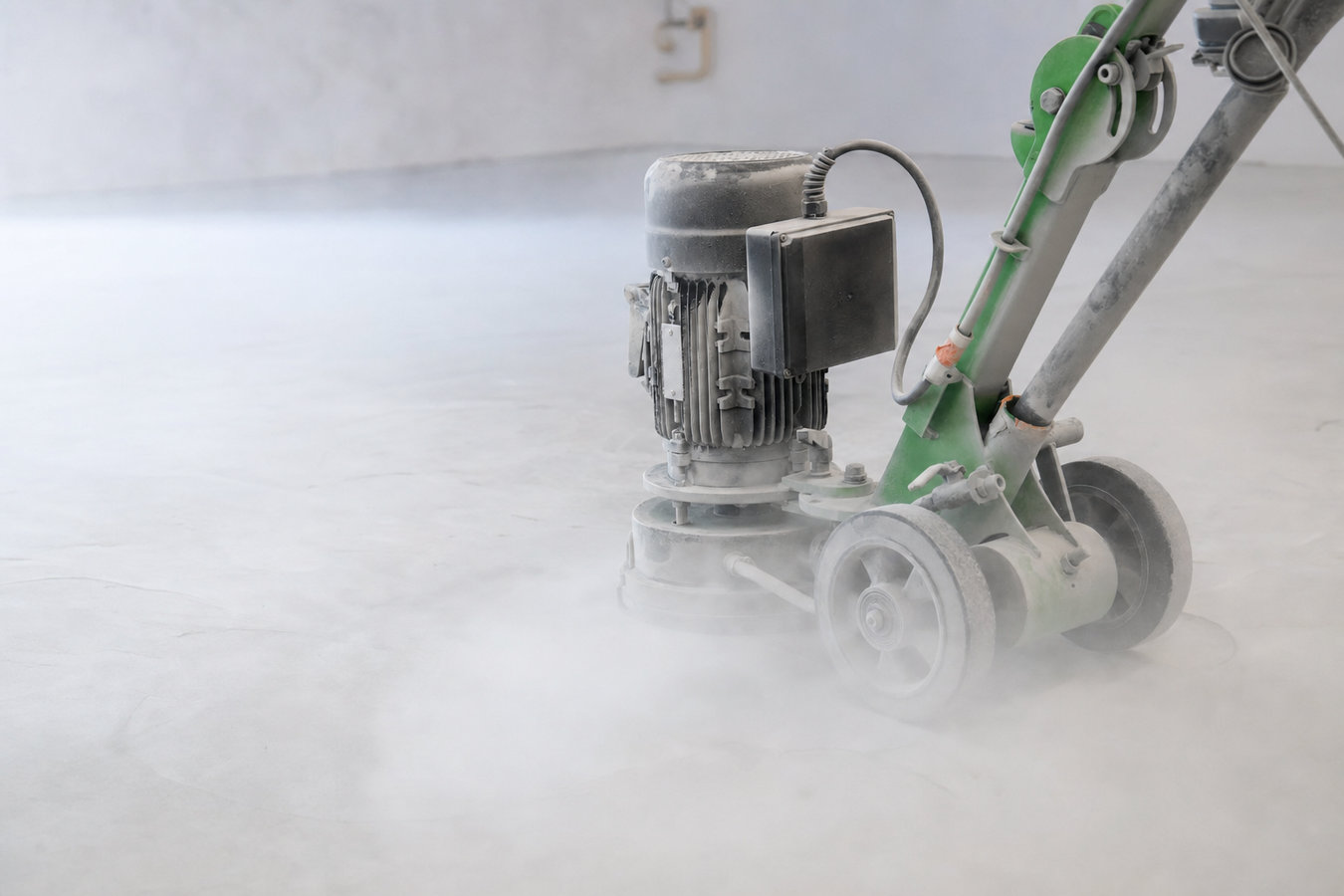
We strip concrete floors in garages, living spaces, commercial buildings, and utility areas throughout Harlingen and the surrounding Rio Grande Valley. The right removal method depends on what is currently on the floor and how thick or stubborn it is. Mechanical grinding uses diamond-equipped machines to abrade away coatings and surface layers, leaving a textured profile that new finishes can grip. Chemical stripping softens thick or bonded coatings before mechanical removal, which is especially useful when grinding alone would be slow or create excess dust. Most jobs use a combination of both. If the stripping work is preparation for a new finish, we can move directly to concrete grinding and surface preparation to bring the slab to the exact profile required for the coating or floor system going down next.
Adhesive removal is one of the most common things we handle in Harlingen, where many older homes have had vinyl tile pulled up, leaving behind a dark residue that prevents anything new from bonding. If the home was built before the mid-1980s, we discuss asbestos testing before any grinding or removal begins - the U.S. Environmental Protection Agency is clear that disturbing asbestos-containing material without proper precautions is a serious health risk, and responsible prep starts with knowing what you are working with. After stripping, we test slab moisture before any new coating goes down, because skipping that step is the most common reason floor finishes fail in Harlingen's humid climate.
Diamond-equipped grinders abrade away coatings, adhesive, and surface layers - the right call for most jobs and leaves a texture that bonds well with new finishes.
Specialized solutions soften thick or stubborn coatings before mechanical removal - used when grinding alone would take too long or generate excess dust.
Targeted removal of glued-down tile adhesive and black mastic - including proper handling when asbestos testing indicates the presence of hazardous material.
Stripping followed by a moisture vapor test to confirm the slab is ready for whatever finish comes next - the responsible final step before any new coating or flooring goes down.
Harlingen has a large share of housing built between the 1950s and 1970s, particularly in neighborhoods near downtown and along the historic arroyo channels. Those homes frequently have original flooring - or at least original adhesive - still in place beneath whatever has been installed on top. The combination of age, the high humidity that has been present in these slabs for decades, and the expansive clay soil that causes constant movement means the floors in these homes often have more going on than they appear to. Stripping an older floor in Harlingen is not always as straightforward as it would be in a newer build, and a contractor who has worked in these neighborhoods knows that going in. The Occupational Safety and Health Administration sets clear standards for dust control during concrete grinding - standards that matter for the health of everyone in the home, not just the crew doing the work.
Most experienced local contractors schedule stripping work for cooler months - October through March - to get better results from materials and keep the work area manageable. Chemical stripping products behave differently on a slab that has been baking in 100-degree heat all day, and crews working in Harlingen's summer heat face real safety considerations. If you are planning a floor project, fall and winter are the most practical windows. We work with homeowners throughout the valley, including Donna and Mercedes, where the same soil conditions and older housing stock create similar prep challenges.
We ask what is currently on the floor, how old the home is, and what you want the floor to look like when everything is done. We respond within 1 business day and schedule an in-person look - you do not need to know all the answers before calling.
We inspect the floor in person - checking the coating or adhesive type, looking for cracks or soft spots, and assessing overall slab condition. If the home is old enough to raise asbestos concerns, we flag it and explain next steps before any estimate is finalized.
Before work begins, the room needs to be cleared completely. We set up plastic sheeting to protect adjacent areas and dust-containment equipment on the machines. Most crews in Harlingen prefer an early morning start to avoid the afternoon heat.
Depending on what is being removed, we use grinding machines, chemical solutions, or both. After stripping, we clean up debris and walk you through the finished surface together - checking for uniform texture, no leftover adhesive patches, and no shiny spots from old sealer. Moisture testing happens here if a new finish will follow.
We come out, look at the floor, and tell you honestly what is involved and what it will cost. Written quote, no pressure, reply within 1 business day.
(956) 264-1934Harlingen's humidity means concrete slabs here hold more moisture than slabs in drier parts of Texas. We test the slab before proceeding to a new finish because moisture trapped under a new coating is one of the most common reasons floors fail in this climate - and a preventable one if the prep work is done right.
A significant portion of Harlingen's housing stock was built before the mid-1980s, and original tile and adhesive from that era can contain asbestos. We bring this up when it is relevant and explain what responsible testing looks like before any removal work starts. A contractor who skips this conversation is not protecting your family.
Mechanical grinding produces fine silica-containing dust that the Occupational Safety and Health Administration treats as a serious health hazard on worksites. We use dust-containment equipment and work practices that keep that dust out of your home, not just out of the work area.
You get a written estimate that breaks out each element of the job separately, and we give you a realistic daily schedule so you know when the loudest work is happening. If we find something unexpected once the old surface comes off, we walk you through it before moving forward - not after the invoice arrives.
Surface prep is the part of a floor project that is invisible once the new finish goes down - which is exactly where shortcuts are most tempting. We treat it as the most important phase of the job, because a floor that is properly stripped and tested is a floor that holds up. That is what we have been doing for Harlingen homeowners since 2019, and it is the standard we hold every job to.
After the old surface comes off and the slab is properly prepped, epoxy gives you a durable, easy-clean finish built for garages, shops, and high-traffic floors.
Learn MoreWhen stripping alone is not enough, concrete grinding levels the slab, opens the surface profile, and creates the texture needed for a new coating to bond correctly.
Learn MoreCooler temperatures mean better results from stripping materials and a more comfortable job site. Book your project now before the calendar fills up.